

For decades the conversation around psychedelics was shut down before it could start.
Scheduled. Stigmatized. Silenced.
But neuroscience didn't stop asking the question. And what it's finding is quietly rewriting everything we thought we knew about the human brain, consciousness, and what it actually means to feel alive.
Here's where the science actually stands.
The Default Mode Network — Your Brain's Autopilot
To understand what psychedelics do to the brain you first need to understand what your brain does without them.
Neuroscientists call it the Default Mode Network — or DMN. It's the set of brain regions that activate when you're not focused on the outside world. When you're ruminating, self-referencing, replaying the past, or worrying about the future.
The DMN is essentially your ego on autopilot.
And for most people — it never shuts up.
Depression, anxiety, addiction, and trauma are all associated with an overactive DMN. The same loop playing on repeat. The same walls closing in. The same story about who you are and what's possible.
What Psychedelics Actually Do
Here's where it gets fascinating.
Neuroimaging studies — particularly those out of Imperial College London and Johns Hopkins University — have shown that psychedelic compounds dramatically reduce activity in the Default Mode Network.
The autopilot switches off.
And when it does — the brain doesn't go quiet. It gets louder in completely different ways. Neural regions that rarely communicate with each other suddenly start talking. New connections form. New patterns emerge. The rigid architecture of the self becomes temporarily fluid.
Researchers call this neuroplasticity — the brain's ability to rewire itself. And psychedelics appear to create windows of extraordinary neuroplastic potential.
The Serotonin Connection
Most classical psychedelics — psilocybin, DMT, LSD — work primarily on the serotonin system. Specifically they bind to the 5-HT2A receptor with remarkable affinity.
Serotonin is your brain's master mood regulator. It governs how you perceive reality, process emotion, experience time, and feel connected to the world around you.
When 5-HT2A receptors are activated the brain enters a state of heightened sensory awareness, emotional openness, and cognitive flexibility. The world gets more vivid. Connections feel deeper. Thoughts move differently.
This is not your nervous system being suppressed — the way alcohol suppresses it.
This is your nervous system being turned all the way up.
Neuroplasticity — The Real Prize
The most exciting finding in modern psychedelic neuroscience isn't the acute experience.
It's what happens after.
Studies are showing that even a single psychedelic experience can promote lasting structural changes in the brain — increased dendritic branching, new synaptic connections, and sustained shifts in default patterns of thought and behavior.
Karl Friston's work on predictive processing suggests that psychedelics may work by temporarily loosening the brain's grip on its own predictions — allowing genuinely new information, new perspectives, and new ways of being to emerge.
Robin Carhart-Harris at UCSF has described this as a period of increased "entropic brain activity" — more chaos, more possibility, more signal from parts of the mind that normally never get heard.
What This Means for Mental Health
The clinical implications are staggering.
Johns Hopkins and NYU have both published landmark studies showing psilocybin producing rapid, sustained reductions in treatment-resistant depression and end-of-life anxiety — in some cases after a single session.
MAPS has spent decades building the clinical case for MDMA-assisted therapy for PTSD — with results that dwarf anything currently available pharmacologically.
The FDA has granted breakthrough therapy designation to both psilocybin and MDMA-assisted therapies. The science has officially arrived.
The Bigger Picture
What neuroscience is telling us — slowly, carefully, rigorously — is that the human brain is far more plastic, far more capable, and far more hungry for genuine experience than we ever gave it credit for.
We built a civilization on numbing that hunger.
Alcohol. Prescription sedatives. Endless distraction.
And it turns out the hunger was never the problem.
The hunger was the point.
Every ancient civilization on earth understood this. They built rituals around it. They found plants that opened the door. They knew that the altered state wasn't an escape from reality — it was a deeper encounter with it.
Modern neuroscience is simply putting numbers to what they already knew.
Where NOKO Fits
NOKO isn't a psychedelic. We want to be clear about that.
But NOKO Magic Blend was designed with the same philosophy that neuroscience is now validating — that your brain deserves more than suppression.
That clarity, euphoria, bliss, and genuine cognitive enhancement are not only possible without alcohol — they're the natural state your nervous system has been trying to reach all along.
High potency nootropics. Natural ingredients. Seven bold flavors.
No hangover. No neurotoxins. No numbing.
Don't numb it. Feel everything.
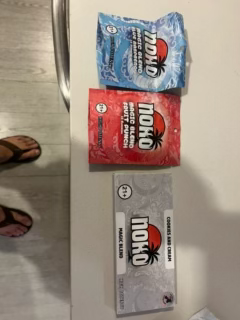
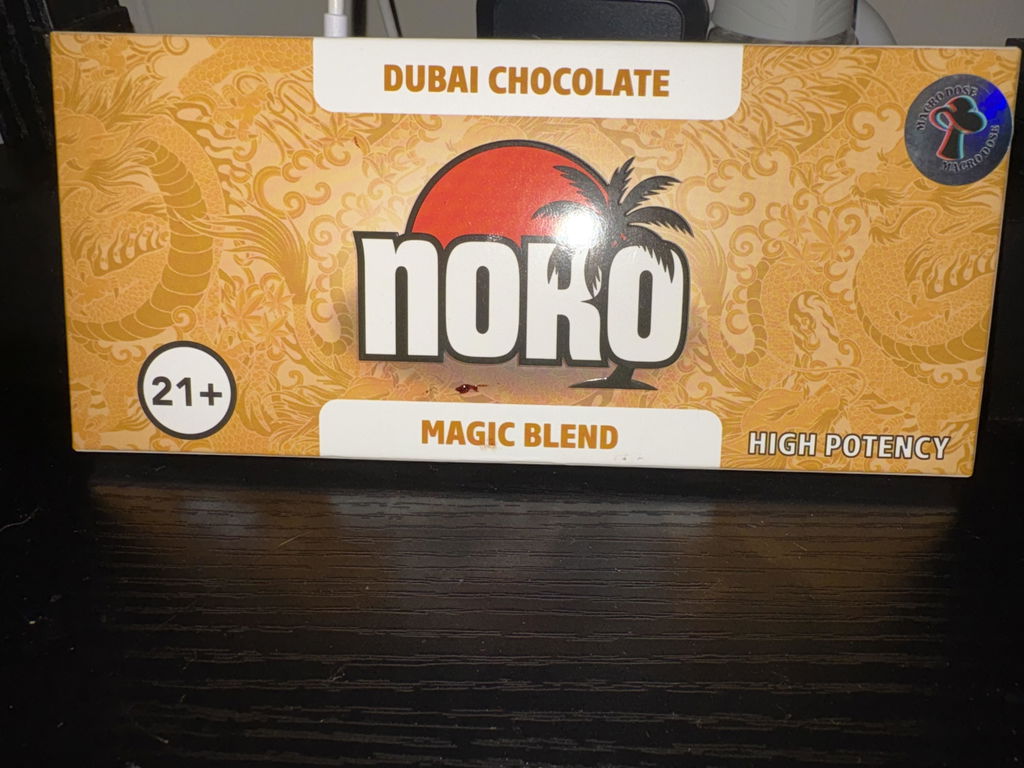
NOKO Magic Blend — available in Blue Raspberry, Watermelon, Fruit Punch, Mixed Berry, Dubai Chocolate, Sweet Mint, and Cookies & Cream. 21+
0 comments