

For decades psilocybin research focused almost entirely on the mind.
Depression. Anxiety. PTSD. End of life care. The results were extraordinary — but they only told part of the story.
In July 2025 researchers at Baylor College of Medicine and Emory University published a study that shifted the conversation entirely.
It turns out psilocybin doesn't just change how you think. It may change how fast you age.
The Study
Published in npj Aging — a Nature Portfolio journal — the study titled "Psilocybin treatment extends cellular lifespan and improves survival of aged mice" provides the first direct experimental evidence that psilocybin and its active metabolite psilocin may act as powerful geroprotective agents — compounds that help slow biological aging at the cellular and organismal level. ULAZAI
That's a significant statement from a peer reviewed Nature journal. Not a wellness blog. Not a supplement company. One of the most respected scientific publishing platforms in the world.
What They Actually Found
The study found that psilocybin may help delay aging by increasing the cellular lifespan of human skin and lung cells by more than 50%. Melies AI
Read that again.
Human skin cells. Living longer. By more than fifty percent.
Researchers identified that psilocin — a byproduct of consuming psilocybin — actively delays aging in cells and organisms. MunaLabs-Studio
The study combined laboratory experiments on human cells with a real world longevity trial in aged mice — and found meaningful results in both.
Why This Matters
The anti-aging industry is enormous. Hundreds of millions of dollars flow annually into supplements, treatments, and interventions most of which have modest evidence behind them at best.
As revenues from the anti-aging market surged past $500 million last year, Emory University researchers identified a compound that actively delays aging in cells and organisms. Figmalion
That compound wasn't a new synthetic molecule developed in a pharmaceutical lab.
It was psilocybin. A naturally occurring compound that has existed in mushrooms for approximately 65 million years.
What Is Cellular Aging?
To understand why this finding is significant you need to understand what cellular aging actually is.
Every cell in your body has a lifespan. As cells age they go through a process called senescence — they stop dividing, start malfunctioning, and begin releasing inflammatory signals that damage surrounding tissue. Senescent cells accumulate over time and are one of the primary drivers of the visible and invisible signs of aging — in your skin, your organs, your brain, and your immune system.
Anything that meaningfully extends cellular lifespan or reduces senescence has profound implications for how we age across every system in the body.
That's what psilocybin appears to be doing.
The Skin Connection
For anyone paying attention to the aging conversation this finding has immediate practical implications.
Your skin is your largest organ and one of the most visible indicators of biological age. Skin cells — the same type tested in this study — are on the front line of cellular aging. Collagen producing fibroblasts slow down. Cellular turnover decreases. The skin thins, loses elasticity, and loses its ability to repair itself.
If psilocybin genuinely extends the lifespan of skin cells by more than 50% the implications for skin aging alone are extraordinary.
Compare that to alcohol — which actively destroys collagen, dehydrates skin cells, promotes inflammation, and accelerates every visible marker of skin aging.
The contrast couldn't be starker.
Beyond the Skin
The cellular aging implications extend far beyond appearance.
Lung cells were also tested in the study — and showed similar results. Researchers are now beginning to discuss adding biological aging markers to future psilocybin clinical trials that are already underway for depression, chronic pain, and other conditions.
Several psilocybin studies for depression, chronic pain, and other conditions are underway as of early 2026, and researchers are beginning to discuss adding biological aging markers to future protocols. ULAZAI
The question being asked is no longer just — does psilocybin help mental health?
The question is now — does psilocybin slow aging itself?
The Honest Caveat
Good science demands honesty about what we know and what we don't.
This is early stage research. The human cell findings are compelling. The mouse longevity findings are promising. But human clinical trials specifically targeting aging are not yet complete.
What we can say is that the mechanism is real, the early evidence is significant, and the scientific establishment — via Nature's publishing platform — considered it worthy of serious attention.
That's more than can be said for most of what fills the anti-aging supplement market.
The Bigger Picture
There is something poetic about where longevity research is landing in 2025 and 2026.
For fifty years psilocybin was scheduled, suppressed, and dismissed. During that same period Western culture normalized alcohol — a compound that depletes collagen, kills neurons, inflames every system in the body, and accelerates aging at the cellular level.
One was called medicine by every indigenous culture that used it.
The other was called a good time by the culture that banned the first one.
Science is slowly, carefully, rigorously arriving at what those cultures already understood.
Nature got there first. It always does.
Where NOKO Fits
NOKO isn't psilocybin. We want to be clear about that.
But NOKO Magic Blend was built on the same founding philosophy that this research is now validating — that your body and mind deserve compounds that work with your biology. That elevate rather than deplete. That support the systems responsible for how you feel, how you think, and how you age.
High potency nootropics. Natural ingredients. Seven bold flavors.
No hangover. No inflammation. No cellular damage.
Don't numb it. Feel everything.
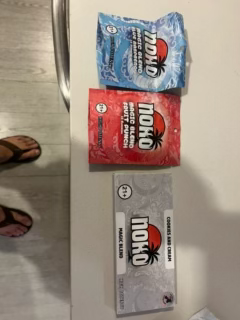
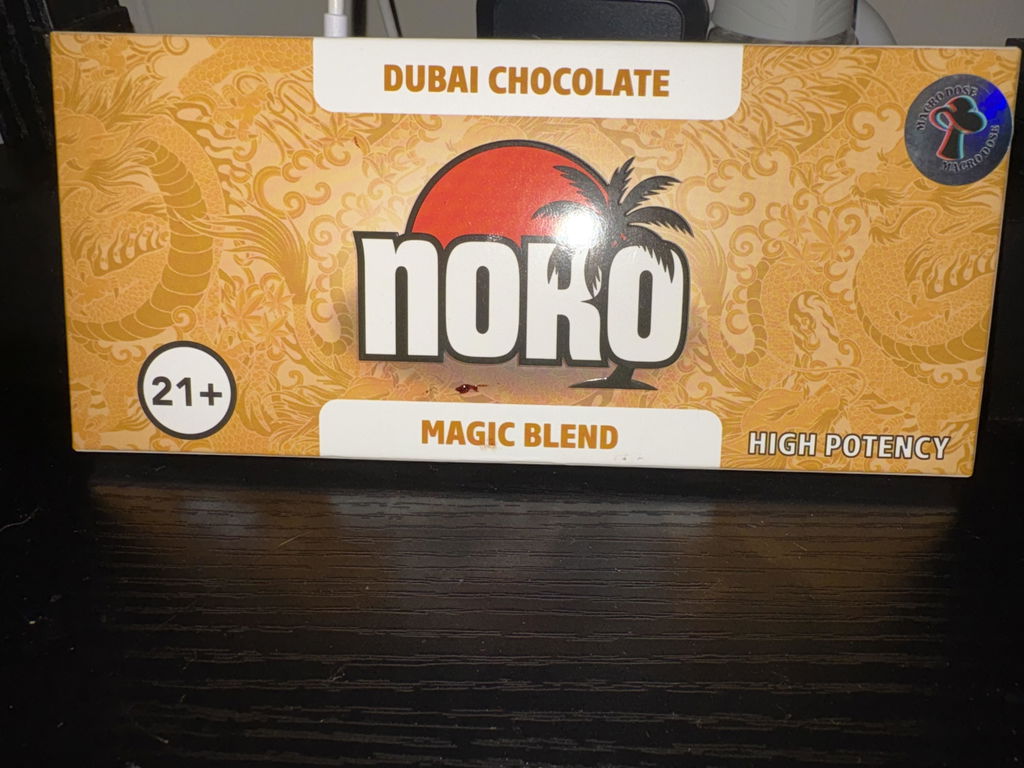
NOKO Magic Blend — available in Blue Raspberry, Watermelon, Fruit Punch, Mixed Berry, Dubai Chocolate, Sweet Mint, and Cookies & Cream. 21+
0 comments