

Cut Cooling Costs 8.2% by Pairing a Dehumidifier With AC in US Homes
Noko editorial teamFor most humid climates, running AC dry mode during moderate stickiness and adding a standalone dehumidifier when relative humidity stays above 55% covers nearly every home. Whole-house dehumidification makes sense only in sealed, persistently damp homes or light commercial spaces. If you’re shopping for a unit that handles both cooling and moisture, models like the ZAFRO ComfortAir, ZAFRO ComfortFlow, and ZAFRO CorePro give you room-by-room options without overcooling your space to chase dry air.
TL;DR:
- An AC’s dry mode can help reduce humidity but lacks a precise setpoint, making it less effective in persistently humid environments.
- Whole-house dehumidifiers paired with central AC keep indoor humidity below 55% more reliably and reduce AC overcooling needs.
- Portable dehumidifiers are best suited for single rooms or small spaces, while ducted systems are recommended for whole-home moisture control in sealed or damp homes.
- Properly sized dehumidifiers, rated by current IEF standards, control humidity more effectively than oversized units that cycle frequently.
- Combining a dedicated dehumidifier with AC can lower overall energy costs by decreasing the load on the cooling system and enhancing comfort.
Table of Contents
- How Does an AC With Dehumidifier Actually Remove Moisture?
- AC Dry Mode vs. a Standalone Dehumidifier vs. Whole-House Systems
- Matching Dehumidification Types to Your Existing HVAC Setup
- How to Choose the Right Capacity and Controls
- Running and Maintaining Your AC With Dehumidifier Setup
- What the Energy and Cost Data Actually Shows
- Why I’d Separate Cooling From Drying in Most Humid Homes
- Which ZAFRO Model Fits Your Space?
- Sources
- FAQ
How Does an AC With Dehumidifier Actually Remove Moisture?
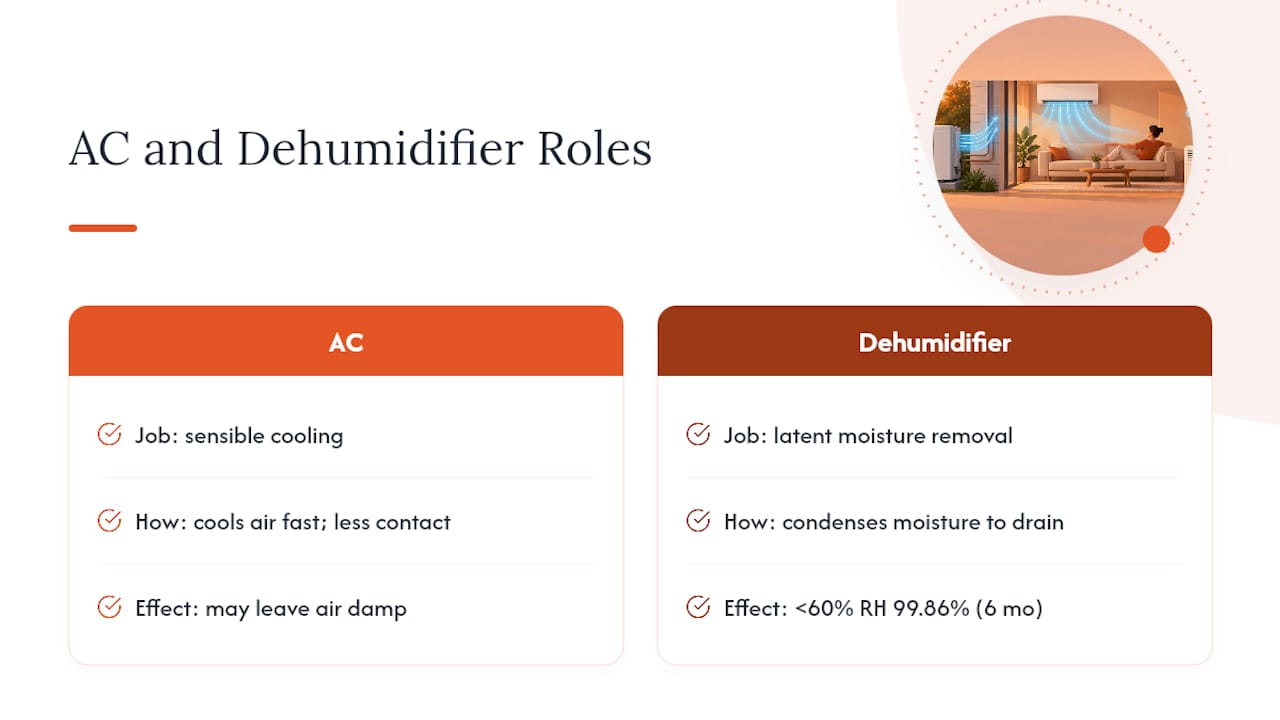
Your air conditioner does two jobs at once, and most people only notice one of them. Sensible heat is the temperature you feel drop when cold air blows out of the vents. Latent heat is the moisture pulled out of the air as it passes over the cold evaporator coil and condenses into water that drips into your drain line.
The problem is that these two jobs pull against each other. A high-efficiency AC cools your air fast, which means less contact time between the air and the coil, which means less moisture actually condenses out. You end up with a room that reads 72°F on the thermostat but still feels damp and clammy. That’s the paradox behind why an air conditioner with dehumidifier capability matters more in humid regions than raw cooling power alone.
This is exactly the gap that whole-house dehumidifier pairings were designed to close. A Building America case study found that combining a whole-house dehumidifier with central AC kept indoor humidity below 60% for 99.86% of a six-month monitoring period, while also letting the AC run less aggressively. Splitting the two jobs, cooling and drying, means your thermostat doesn’t have to overshoot cold just to wring out the humidity.
AC Dry Mode vs. a Standalone Dehumidifier vs. Whole-House Systems
Air conditioner dry mode works by slowing the fan and running the compressor at low capacity so air lingers longer on the cold coil. It pulls out moisture, but it has no independent humidity setpoint.
A standalone dehumidifier is built for one job and does it with a target number. Portable units are typically rated by pints removed per day, and current ENERGY STAR-certified models run about 20% more efficient than non-certified ones. Whole-house or ducted systems tie into your existing ductwork and handle an entire home rather than one room, particularly in well-sealed homes with persistent humidity issues.
Here’s a quick way to sort which one fits your situation:
- Occasional mugginess in one room: dry mode on your existing AC is usually enough.
- Persistent stickiness, musty smells, or condensation on windows: time for a standalone dehumidifier.
- Whole home reads above 55% RH even with AC running, or you have a finished basement: consider a ducted or whole-house dehumidifier.
- You’re battling mold or allergy symptoms tied to moisture: a dedicated unit with a humidistat gives you control dry mode can’t provide.
Matching Dehumidification Types to Your Existing HVAC Setup
Portable dehumidifiers need zero integration. Plug one in, empty the bucket or route a drain hose, done. They’re the right call for a single damp bedroom, a laundry room, or an apartment where ductwork isn’t an option.
Ducted whole-house systems tie into your central AC’s return air and distribute dry air through existing supply ducts. Integrated AC features go a step further: enhanced dehumidification modes slow the blower to extend coil contact time, while subcooling reheat and full-condensing reheat systems reheat the dried air slightly so you don’t overcool the room just to hit a humidity target.
Installation basics matter more than people expect. A standalone unit performs best placed near your central return, and a remote dehumidistat gives more accurate whole-home readings than the sensor built into the unit itself, according to Building America’s measure guideline. Ducted systems need central-fan mixing so dry air actually reaches every room, not just the one nearest the unit. Desiccant or gas-regenerated dehumidifiers are worth a look only in extreme humidity zones or commercial kitchens, where refrigerant-based systems struggle to keep up.
How to Choose the Right Capacity and Controls
Sizing a dehumidifier is not the same exercise as sizing an AC, and that trips up a lot of buyers. Capacity is measured in pints removed per day, but the DOE changed testing procedures in 2019 to the Integrated Energy Factor (IEF), which uses cooler test conditions. That means an older 70-pint unit might now be labeled 50 pints under current standards, without actually removing less moisture. Always compare IEF ratings side by side rather than trusting a legacy pints number alone.
Pro Tip: Don’t assume a bigger pint rating always wins. A correctly sized unit that runs longer cycles at moderate capacity often controls humidity more evenly than an oversized unit that short-cycles.
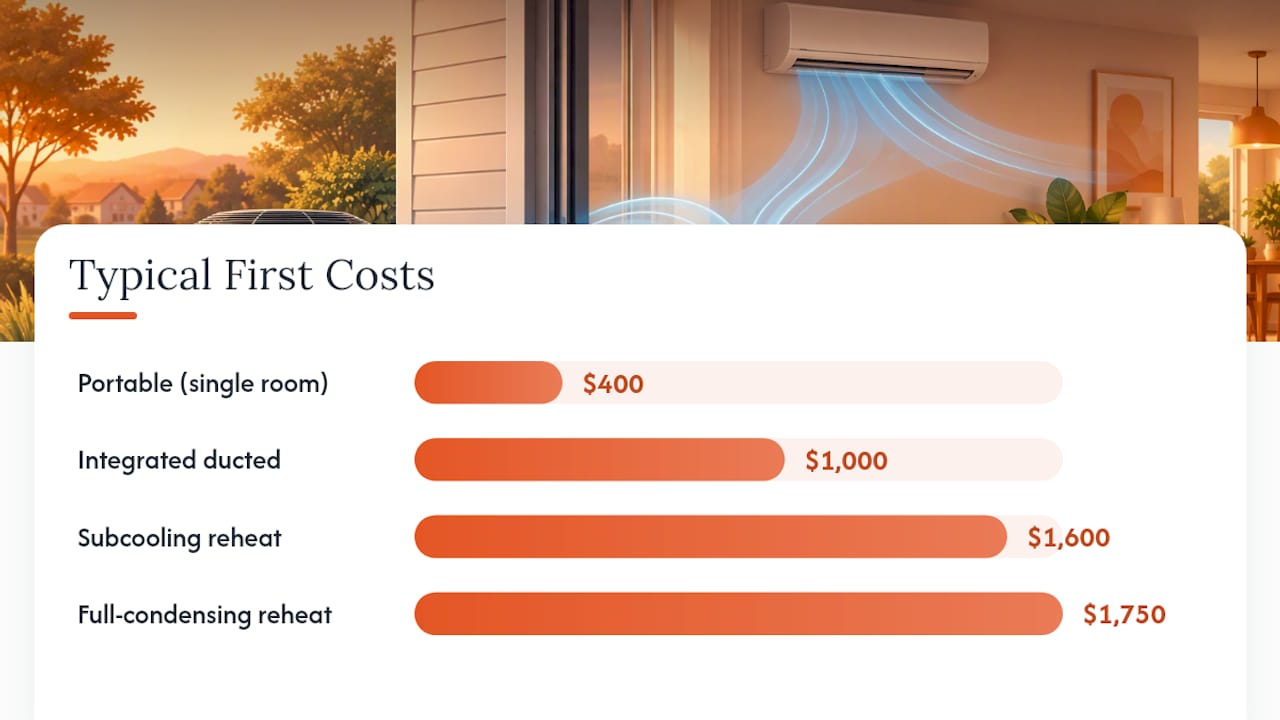
Rough sizing and first-cost guidance breaks down like this, per the Building America measure guideline:
- Standalone portable dehumidifier for a single room or small basement: around $400.
- Integrated ducted dehumidifier tied into existing ductwork: around $1,000.
- Subcooling reheat system for whole-home comfort without overcooling: around $1,600.
- Full-condensing reheat system for the most precise humidity control: around $1,750.
For whole-home systems, ENERGY STAR recommends them specifically for sealed homes running central AC where humidity persists above 55%, and stresses that professional sizing and installation matter for real-world performance. Before you buy anything, run through this checklist: how severe is the humidity problem, how large is the affected area, what’s your energy budget, and how much maintenance are you realistically willing to do. That order of priority will steer you toward the right category faster than any spec sheet.
Running and Maintaining Your AC With Dehumidifier Setup
Target 30 to 50% relative humidity indoors, and never let it sit above 60% for long stretches. That range comes straight from EPA guidance on mold and moisture, and it’s the number worth taping to your thermostat. A $15 hygrometer tells you more about comfort than your thermostat ever will.
Run dry mode for light, occasional humidity. Switch to a dedicated dehumidifier once you’re running it daily just to stay comfortable. Circulating a fan helps mix dry air through the room instead of pooling near the unit.
Basic upkeep that actually prevents callbacks:
- Check and clean filters monthly during high-use season.
- Clean evaporator coils yearly to keep latent removal efficient.
- Inspect condensate drains and pumps for clogs before they overflow.
- If humidity creeps back up after a dry spell, check for a stuck float switch or blocked drain line before assuming the unit is undersized.
What the Energy and Cost Data Actually Shows
Pairing a whole-house dehumidifier with central AC isn’t just a comfort upgrade. It changes how hard your AC has to work.
The Building America case study modeled an 8.2% reduction in projected annual space-conditioning costs when a whole-house dehumidifier ran alongside central AC, because the AC no longer had to overcool the space just to strip out humidity.
Upfront costs range from roughly $400 for a portable unit to $1,750 for a full-condensing reheat system, but the operating math favors the pairing over time in genuinely humid climates. ENERGY STAR-certified units add another layer of savings, using about 20% less power than non-certified models. The rule of thumb: if you’re already running AC nonstop just to feel dry, a dedicated dehumidifier usually pays for itself in comfort and reduced AC runtime within a couple of humid seasons.
Why I’d Separate Cooling From Drying in Most Humid Homes
Chasing humidity with your thermostat alone almost always means a colder house than you actually want. The smarter play is treating moisture control as its own system, not an AC side effect. That’s why I point homeowners toward purpose built options, whether that’s a dedicated dehumidifier or an AC engineered with real moisture control in mind, over cranking the cold and hoping the air dries out along the way.
— Bassem
Which ZAFRO Model Fits Your Space?
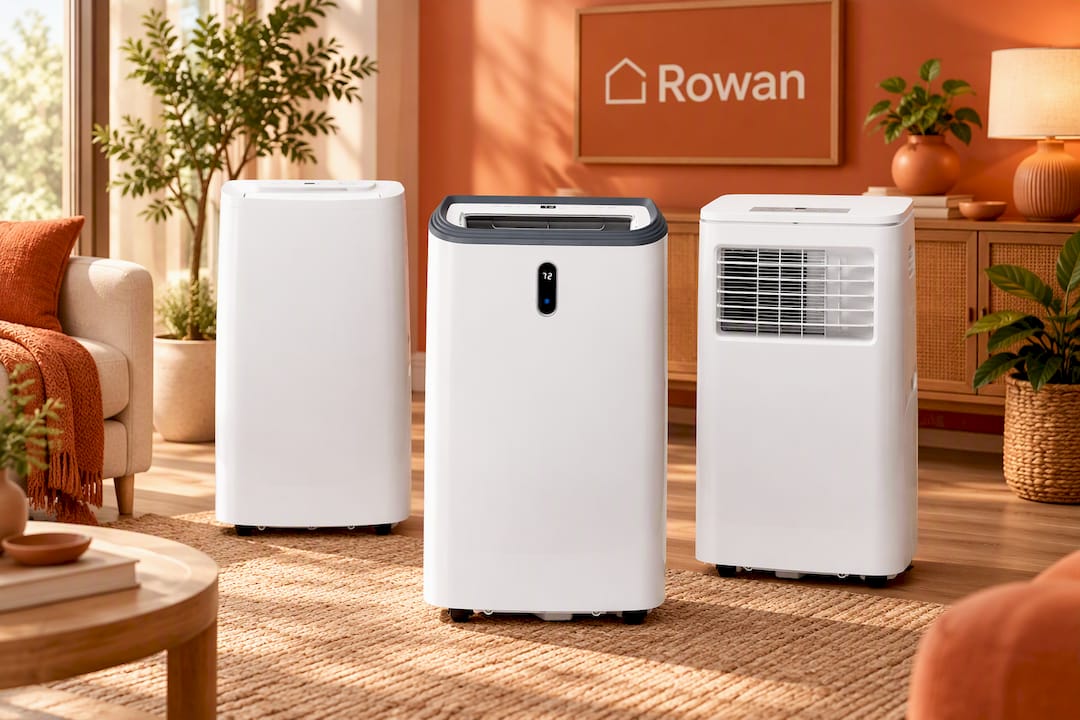
The ZAFRO lineup is designed to address the problem this article covers: comfort without the overcooling penalty. The ZAFRO ComfortAir suits compact rooms and apartments where you want reliable moisture control without a bulky footprint. Need to cover a larger living area? The ZAFRO ComfortFlow scales up for whole-room comfort, while the ZAFRO CorePro handles higher-capacity needs for larger spaces or light commercial use.
Every ZAFRO model offers smart home compatibility, allowing users to monitor and adjust humidity remotely, and purchases come with a 1-year warranty to support a reliable buying experience. Browse the full air conditioner lineup to compare specs side by side, or reach out through the site for sizing help before you commit to a model. If you’re also weighing whole-home humidity against other comfort upgrades, check the 3.2L Comfort Humidifier page to see the flip side of moisture control for drier winter months.
Sources
- Improving Comfort in Hot-Humid Climates with a Whole-House Dehumidifier — Building America case study
- Measure Guideline: Supplemental Dehumidification in Warm-Humid Climates — Building America
FAQ
Does an AC Have a Dehumidifier Built In?
Most air conditioners remove some moisture as a side effect of cooling, and many include a dry mode that slows the fan to pull out more humidity. That’s different from a dedicated dehumidifier, which targets a specific humidity setpoint rather than just cooling the air.
Are Air Conditioners Good Dehumidifiers?
They’re decent, but not built for the job specifically. Modern efficient ACs cool air quickly, which shortens contact time with the coil and can leave humidity higher than a room actually needs, which is why a Building America case study found real comfort gains from pairing AC with a dedicated dehumidifier.
Can You Get a Combined Dehumidifier and Air Conditioner?
Yes, several AC units include enhanced dehumidification modes or dry settings, and whole-house systems can integrate ducted dehumidifiers directly with central AC. Models like the ZAFRO ComfortAir and ZAFRO ComfortFlow are built with moisture control as part of standard operation, not an afterthought.
Can I Use AC and Dehumidifier Together?
Yes, and in humid climates it’s often the better setup than relying on AC alone. Running both lets your AC hold a comfortable temperature while the dehumidifier independently targets 30 to 50% relative humidity, which the EPA recommends for reducing mold risk and improving comfort.